What began as a website project evolved into more than a decade of supporting customer-facing operations inside a growing EcoWater dealership.
What Growth Actually Looks Like

+
The Beginning
The relationship between CrowToes and Angel Water began in 2014 with a website project.
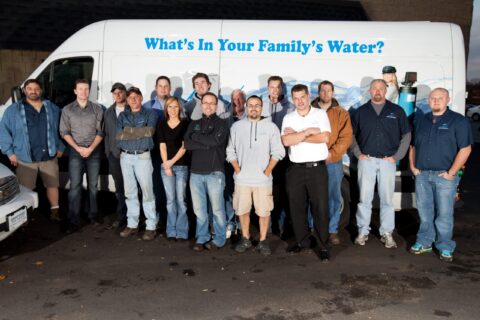
At the time, Angel Water was a growing EcoWater dealer with approximately $2.9 million in annual revenue, around 20 employees, and a single location serving the northwestern suburbs of Chicago. Most of the sales process was still handled manually. Lead information was often captured on paper, follow-up processes varied from one salesperson to the next, and there was limited visibility into where opportunities were coming from or how they were moving through the business.
The original engagement focused on the company website and lead generation forms. The goal was straightforward: improve the online experience and help generate more opportunities.
As Angel Water continued to grow, however, new challenges began to emerge, and those challenges had very little to do with the website.
Growth Creates Complexity
Over the next decade, Angel Water experienced significant growth. Annual revenue increased from approximately $2.9 million to more than $15 million. The company expanded from a single location to serving customers across northeastern Illinois and the West Palm Beach area. Employee count grew from roughly 30 people to more than 80, while lead volume increased from a few hundred opportunities each month to more than 1,500.
As the business grew, the operational challenges changed.
More leads needed to be handled. More employees became involved in customer-facing processes. New systems were introduced. More information needed to move between departments. More exceptions appeared that did not fit neatly into existing workflows.
The website was no longer the primary challenge.
The challenge was coordinating an increasingly complex operation while maintaining a consistent experience for customers and employees.
As those challenges evolved, so did the role CrowToes played in supporting the business.

Growing Alongside The Business
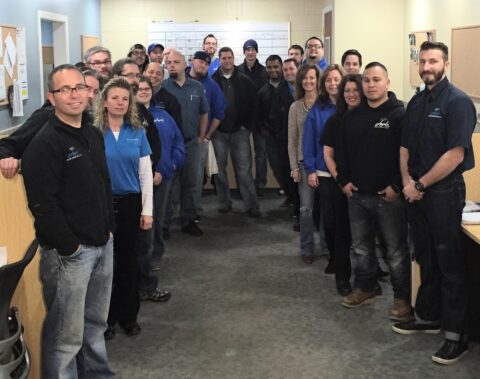
A question about lead generation often led to a conversation about reporting. Reporting led to automation. Automation led to Salesforce. Salesforce led to scheduling. Scheduling led to process design. Process design led to questions about responsibilities, communication, and operational coordination.
Over time, CrowToes became involved in a much wider range of conversations. Not because the scope of work was expanding intentionally, but because each new challenge revealed connections to other parts of the operation.
The more customer-facing systems, processes, and teams became intertwined, the more important it became to understand how they worked together.
Eventually, the work was no longer centered on websites or individual systems. The focus had shifted toward helping the business coordinate an increasingly complex operation.
The Challenge Wasn’t The Systems
One example illustrates the challenge particularly well.
As Angel Water’s lead volume increased, multiple systems became involved in scheduling in-home water tests.
- The website could schedule appointments.
- A custom lead generation application used by marketers at events could schedule appointments.
- Salesforce tracked leads, appointments, and customer interactions.
- Customer service representatives could also take new leads and move appointments when people called in.
Individually, each system worked exactly as intended.

- Website is getting more leads
- Events are generating more leads
- Salesforce receives all the leads
- The phone team is doing their job really well, but…
Rescheduling Half of all Appointment Requests
The problem was that none of the systems had a complete picture of reality in the business.
A time slot that appeared available in one system might already be partially occupied in another. Customer service adjustments could create scheduling conflicts that other systems could not see. When a lead converted to an in-home appointment, routing requirements might impact the availability of a sales representative without other systems understanding what had changed.
As lead volume increased, these small discrepancies compounded and created operational friction throughout the scheduling process.
The solution did not involve replacing the systems.
The solution was creating a way for them to coordinate with one another, maintain a shared understanding of availability, and operate from the same set of business rules.
That lesson would appear again and again over the years.
The systems were rarely the problem. The challenge was usually what was happening between them.

Supporting Operational Continuity During Growth
The scheduling challenge was not unique.
As Angel Water continued to grow, similar coordination challenges began appearing throughout customer-facing operations. Lead volume increased. More employees became involved in the sales and service process. New systems were introduced. More information needed to move between departments, and more exceptions appeared that required human judgment.
Lead handling became more complex. Service requests and sales opportunities needed to be routed differently. Customer communications needed to remain consistent across multiple systems. Reporting required increasingly accurate data. Processes that once worked naturally became more difficult to maintain as additional employees, departments, and responsibilities were added to the operation.
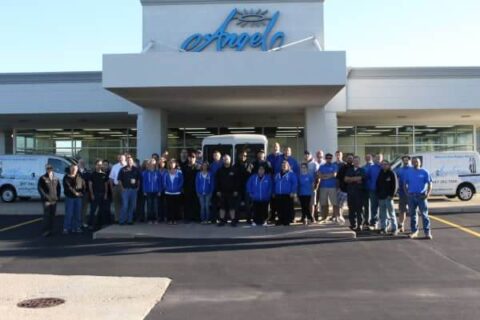

Over time, CrowToes became involved in a wide range of initiatives focused on improving reliability, reducing friction, and helping information move more effectively throughout the business. Some projects involved lead generation, scheduling, automation, reporting, or system integrations. Others focused on process design, process enforcement, training, visibility, and operational coordination.
The specific challenges changed over the years, but the underlying pattern remained remarkably consistent.
As operational complexity increased, reliable execution became increasingly important.
The Lessons That Became CrowToes
More than a decade of working alongside a growing EcoWater dealership revealed patterns that appeared again and again, regardless of the systems involved, the people involved, or the specific challenge being addressed.
Growth Creates Operational Complexity
As businesses grow, more leads arrive, more employees become involved, more software gets added, and more handoffs occur between departments. Growth creates opportunity, but it also creates operational complexity.
Manual Coordination Does Not Scale
Many operational challenges begin when people become responsible for bridging gaps between systems, departments, and processes. What works at one stage of growth often becomes increasingly difficult to maintain as volume increases.
The Systems Are Rarely The Problem
Most systems do exactly what they were designed to do. The challenge is often everything happening between them: the handoffs, dependencies, exceptions, and business rules that no individual system fully understands.
Reliable Execution is Top Priority
Small inconsistencies become larger problems as organizations grow. The ability to execute customer-facing processes reliably becomes increasingly important as operational complexity increases.
Opportunities Fall Through The Cracks Between Systems
When information does not move reliably through the business, leads lose momentum, customer experiences suffer, and operational friction increases. High leverage opportunities can be found in the gaps between systems
Understanding Comes Before Improvement
The most effective solutions are built around reality. Before processes can be improved, systems can be coordinated, or workflows can be automated, the operation itself must be understood.
These lessons ultimately became the foundation of CrowToes and the approach we use today to help growing EcoWater dealers coordinate customer-facing operations as their businesses grow.
Every Growing Dealership Faces Similar Challenges

How much growth can each step in the process handle before it starts breaking down?
Asking that question consistently, and then finding ways to stay ahead of the resulting operational challenges, shaped more than a decade of work with Angel Water and ultimately led to the creation of CrowToes.
If you’re curious how your own operation compares, we built a tool specifically for growing EcoWater dealers: